
AI-modified
AI Use Information for this Web Page
The textual content of this page is AI modified.
- AI status: Modified with AI
- Scope: Entire page textual content
- Human oversight: Reviewed by authors before publication
- Details of AI usage: The page text involves AI. No personal data was used beyond what is strictly necessary.
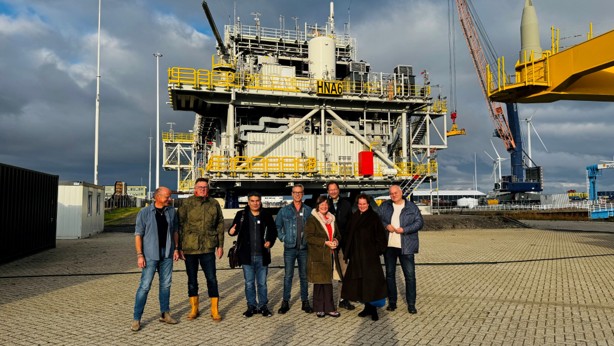
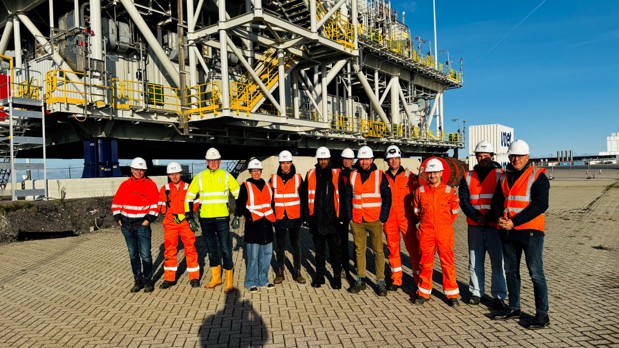
From 2 to 4 November 2026, teachers, education developers and energy-sector specialists met at Phynix – Fire from Water in Eemshaven to explore how industrial hydrogen installations can support education.
Learning with Real Hydrogen Installations: Train-the-Trainer Programme at Phynix
From 2 to 4 November 2026, teachers, education developers and energy-sector specialists met at Phynix – Fire from Water in Eemshaven to explore how industrial hydrogen installations can support education.
Over three days, the H2CoVE Train-the-Trainer programme brought together educators from DCTerra, Noorderpoort, Hanze University of Applied Sciences and other partners, with industry specialists from Phynix. The programme was organised by Delft Offshore Turbine (DOT), ECHT Human Capital and the participating H2CoVE institutions. The central question throughout was how to connect vocational and higher education with real industrial practice to develop the hydrogen workforce of tomorrow.
Day 1: From hydrogen technology to practice-based education
The first day brought together vocational (MBO) and higher professional (HBO) institutions and industry partners. Participants focused on knowledge sharing, practice-based learning and new educational concepts. DCTerra's practorate for Hydrogen in Industry and Networks is working on practice-based courses with particular attention to safety, inspection, maintenance and operation of hydrogen installations.
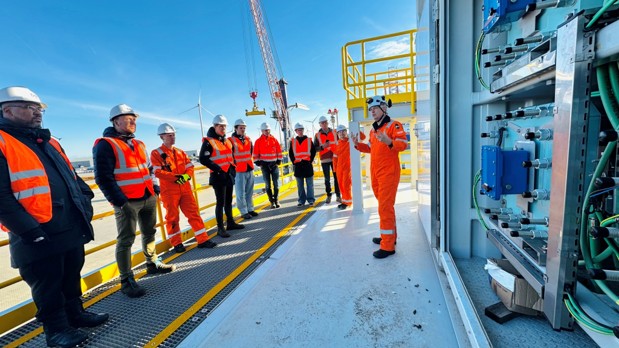
A key challenge is bridging the gap between theory and practical experience. Students, teachers and professionals need to learn on realistic installations, preferably at industrial scale. Together with Phynix and ECHT, the partners are exploring joint course modules, practical facilities and a structured Train-the-Trainer approach. Experience from the European projects Green Skills for Hydrogen and H2CoVE can contribute to this work.
Day 2: Practical assignments and curriculum design
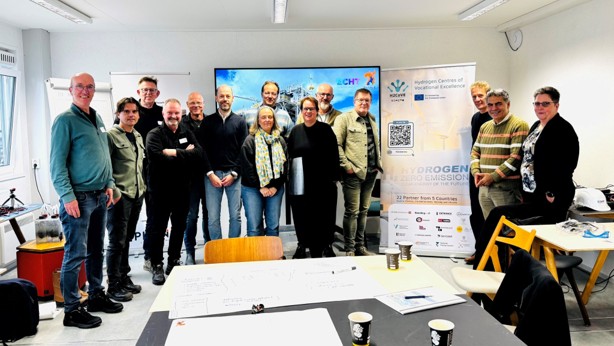
On the second day, three working groups developed a shared approach. A practical session used simple electrolysis equipment and molecular models to explain hydrogen production, and a paper-and-card wind-turbine challenge showed an iterative teaching method: build, measure, improve.
The groups identified several priorities:
• A common foundation course: an outline for a ten-part course, starting with energy and progressing towards the Phynix installation. The first version is planned before Christmas 2026.
• Practical assignments: four assignment areas covering hydrogen production, conversion to electricity, storage and water treatment. Each combines preparation at school, investigation at Phynix and peer presentations. A first pilot is targeted for February or March 2027.
• Breaking down silos: stronger collaboration between MBO, HBO, universities and industry, with shared learning pathways.
Day 3: Continuous learning pathways from MBO to industry
The third day broadened the discussion to include HBO, research universities (WO) and industry partners. The central question was how to develop continuous learning pathways that connect education with industrial practice and support lifelong learning.
Six priorities emerged:
-
Industry-driven competencies: identifying the knowledge and skills companies need, particularly in hydrogen operations, inspection, maintenance and safety.
-
Connected educational levels: learning pathways from MBO to HBO and WO, alongside upskilling and reskilling of the existing workforce.
-
Learning by doing: using Phynix as a real industrial learning environment.
-
Integration into curricula: embedding practical assignments and industrial case studies in established programmes rather than creating isolated activities.
-
Shared knowledge and data: exploring shared educational resources, digital platforms and digital twins.
-
Long-term collaboration: moving beyond one-off visits towards structural partnerships with clear roles and shared commitments.
Participants agreed that Phynix should become more than a demonstration facility. Its plans to operate as an open-access test and teaching field lab offer a way to connect industrial practice, applied research and education.
What comes next
Each institution had prepared a one-page proposal describing its planned activity, contribution and support needs. Open questions include access and supervision arrangements, shared resources and sustainable funding. The next challenge is turning these ideas into sustainable educational programmes and long-term cooperation.
From learning about hydrogen technology to learning with real hydrogen installations.
Over the coming weeks, we will develop practical assignments that vocational students can carry out on the platform in line with the agreed standard operating procedures (SOPs). DCTerra will develop the practical assignment for the 2.5 MW electrolyser.
Students will study the relevant theory and complete the required training at college before coming to the platform, so they arrive well prepared to work in a real industrial hydrogen environment.

